
-Finding pinholes on samples
For magnet (enameled) wire, a pin hole tester - e.g. the salt-bath type used in laboratories—detects tiny defects in the enamel insulation coating on copper or aluminum conductors. These pinholes expose the bare wire, risking short circuits, overheating, or failure in motors, transformers, and coils.
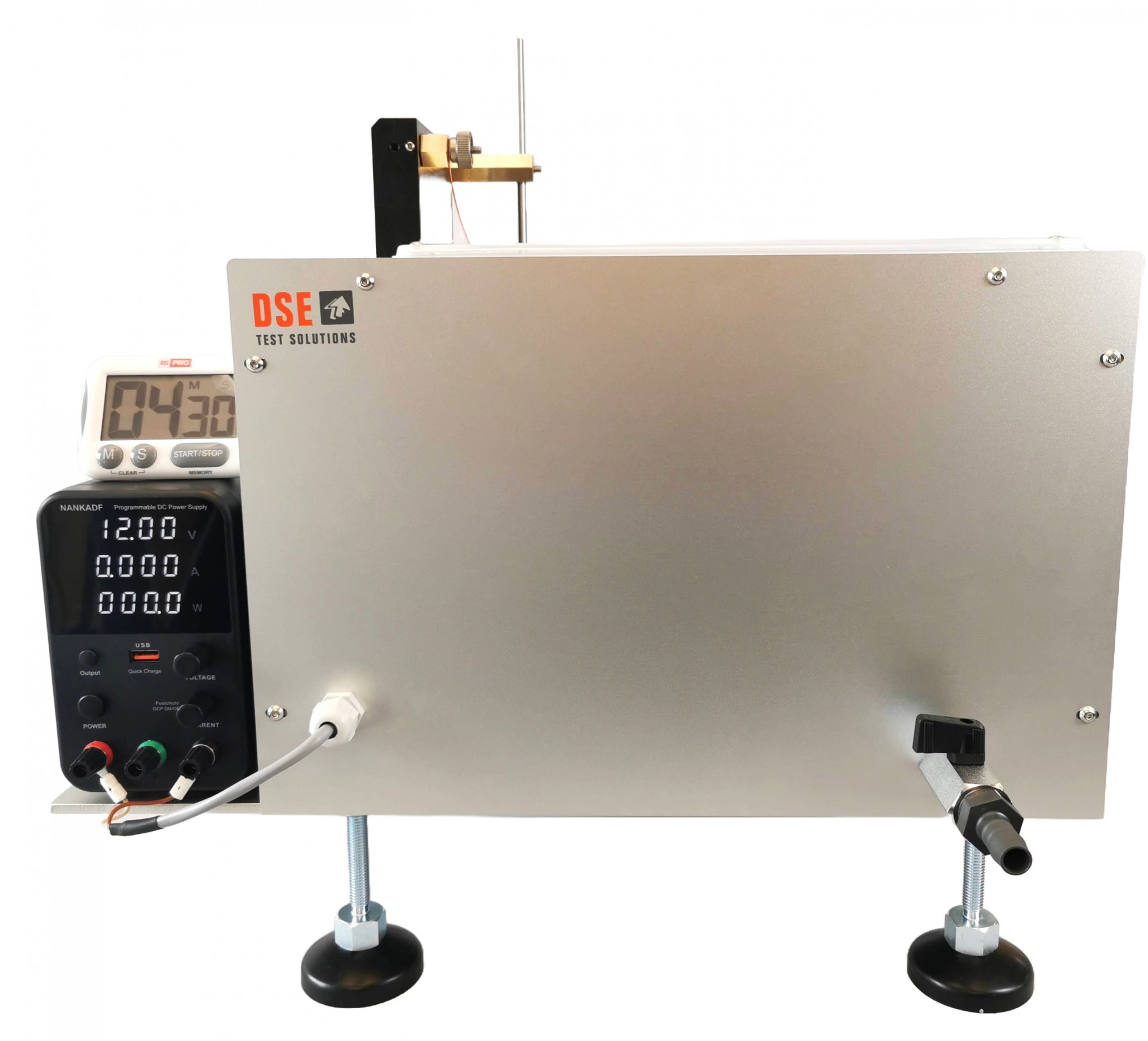
Lab Testing Process
-
Prepare a saltwater bath (typically 2 g/L sodium chloride) with 3% phenolphthalein indicator.
-
Connect one end of a preheated wire sample (10' in a thermostatic oven at 125° Celcius) to a low-voltage DC supply (12Vdc) and immerse it in the bath for a set time (e.g., 1 second to 99 minutes).
-
Intact enamel insulates; pinholes allow electrolysis, turning the solution pink/red at defect spots via pH change, making them visible for counting.
Pinholes per meter are tallied; exceeding limits (per wire specs) rejects the batch for poor enamel uniformity. Example: A 1-meter coil dipped at 12 V shows pink rings—count them visually post-test.
For more information read the datasheet here. Or contact our sales department.

RELATED


