• Automated Test
    • PCBA Test Systems
    • End-of-line Test Systems
    • Test Fixtures
    • LabVIEW and Teststand
    • Test Data Management
    • JTAG/Boundary Scan
    • Our technology partners
    • RF Shielded boxes
  • Wire Testers
    • Laboratory Tester
      • Mechanical Tester
        • Elongation Testers
        • Scrape Testers
        • Jerk Testers
        • Spring Back Tester
        • Coefficient of Friction Testers
        • Mandrel Winding Tester
        • Peel Testers
        • Flat Wire Torsion Tester
        • Windability tester
      • Electrical Tester
        • Breakdown Voltage Testers
        • Pinhole Testers for Laboratory use
        • Twist Specimen Fabricators
        • High Voltage Continuity Tester
        • Transposed Cable Fault Finder
        • E-Vehicle Desktop Hairpin Tester
        • Electrical Resistance Tester
      • Solderability Tester
      • Thermal Tester
      • Curing control
        • TD5 Tangent Delta
        • TD3 Tangent Delta
      See all cases See all documents
    • Inline Tester
      • E-Vehicle Tester
      • Coil winding
      • In-line Pinhole and Blister Detection
        • HVC 360 Flexible
        • Blister Detection
      See all cases See all documents
    • Agents
  • Moisture Meters
    • DSE4130 - Cranes
    • DSE4111 - Inline
    • DSE4200 - Balers
    • Cases
    • References
  • Cases
  • News
  • Documents
  • About
    • About DSE Testsolutions
    • Team
    • Sustainability & Environment
    • History
    • Career
    • Certificates
  • Contact
DSE Test Solutions
DSE Test Solutions
DSE Test Solutions
  • Automated Test
    Automated Test
    • PCBA Test Systems
    • End-of-line Test Systems
    • Test Fixtures
    • LabVIEW and Teststand
    • Test Data Management
    • JTAG/Boundary Scan
    • Our technology partners
    • RF Shielded boxes
    Go to Automated Test See all cases Documents
  • Wire Testers
    Wire Testers
    • Laboratory Tester
      Laboratory Tester Home
      • Mechanical Tester
        Mechanical Tester Home
        • Elongation Testers
        • Scrape Testers
        • Jerk Testers
        • Spring Back Tester
        • Coefficient of Friction Testers
        • Mandrel Winding Tester
        • Peel Testers
        • Flat Wire Torsion Tester
        • Windability tester
        Go to Mechanical Tester
      • Electrical Tester
        Electrical Tester Home
        • Breakdown Voltage Testers
        • Pinhole Testers for Laboratory use
        • Twist Specimen Fabricators
        • High Voltage Continuity Tester
        • Transposed Cable Fault Finder
        • E-Vehicle Desktop Hairpin Tester
        • Electrical Resistance Tester
        Go to Electrical Tester
      • Solderability Tester
      • Thermal Tester
      • Curing control
        Curing control Home
        • TD5 Tangent Delta
        • TD3 Tangent Delta
        Go to Curing control
      Go to Laboratory Tester
    • Inline Tester
      Inline Tester Home
      • E-Vehicle Tester
      • Coil winding
      • In-line Pinhole and Blister Detection
        In-line Pinhole and Blister Detection Home
        • HVC 360 Flexible
        • Blister Detection
        Go to In-line Pinhole and Blister Detection
      Go to Inline Tester
    • Agents
    Go to Wire Testers See all cases See all documents
  • Moisture Meters
    Moisture Meters
    • DSE4130 - Cranes
    • DSE4111 - Inline
    • DSE4200 - Balers
    • Cases
    • References
    Go to Moisture Meters
  • Cases
  • News
  • Documents
  • About
    • About DSE Testsolutions
    • Team
    • Sustainability & Environment
    • History
    • Career
    • Certificates
  • Contact
Spring Back Tester

Wire Testers / Laboratory Tester / Mechanical Tester

Spring Back Tester

Determine the elasticity of your wire

The springback properties of your wire

A springback tester is used to measure how much a metal (or wire/sheet) elastically returns to its original shape after being bent, formed, or wound. Its purpose is to quantify this “springback” so manufacturers can adjust tooling and process parameters to achieve accurate final dimensions and consistent quality in formed parts. Springback testing is valuable in enameled wire production because it directly indicates the softness and elastic behavior of the conductor, which strongly affects winding performance and final coil quality.

What springback is

When metal is bent or formed, part of the deformation is elastic and recovers once the load is removed, causing the angle or curvature to open up slightly; this effect is called springback. If not controlled, springback leads to dimensional errors, poor fit in assemblies, and more scrap or rework.

Role of a Spring Back Tester

A springback tester bends or winds a standardized specimen of wire in order to measure how much the wire elastically recovers after being bent, which reflects its elastic deformation behavior. These results are closely linked to copper quality and annealing degree, so springback testing becomes a quick proxy for whether the base wire metallurgy and thermal treatment are within specification.​

Where it is used

Springback testers are used in sheet metal and wire processing, such as stamping, bending, and can or tube production, where tight tolerances on bend angle or curvature are critical. They are particularly useful in plants that may not have full tensile-testing capability but still need a quick in‑plant check on formability and springback of incoming or in‑process material.

Benefits in winding and coil forming

Soft, well‑annealed wire shows a smaller springback angle, so it conforms better to tight winding geometries and helps maintain coil shape and slot fill factor. If springback is too high, coils can “open up,” change diameter, or not fit properly in slots or bobbins, which harms packing density and may cause assembly or performance issues.

Preventing production and customer problems

Abnormal springback values correlate with problems such as wire breakage during winding, poor coil formation, and a stiff “feel” that operators often notice even when other parameters look acceptable. Routine springback testing allows early detection of process drift (for example, insufficient annealing or excessive cold work), reducing scrap, machine downtime, and field complaints.

Types of Spring Back Testers

If you need quick and specific information about our Spring Back Testers, you can click on the datasheets to the right. 

Or please contact our sales department for more information.
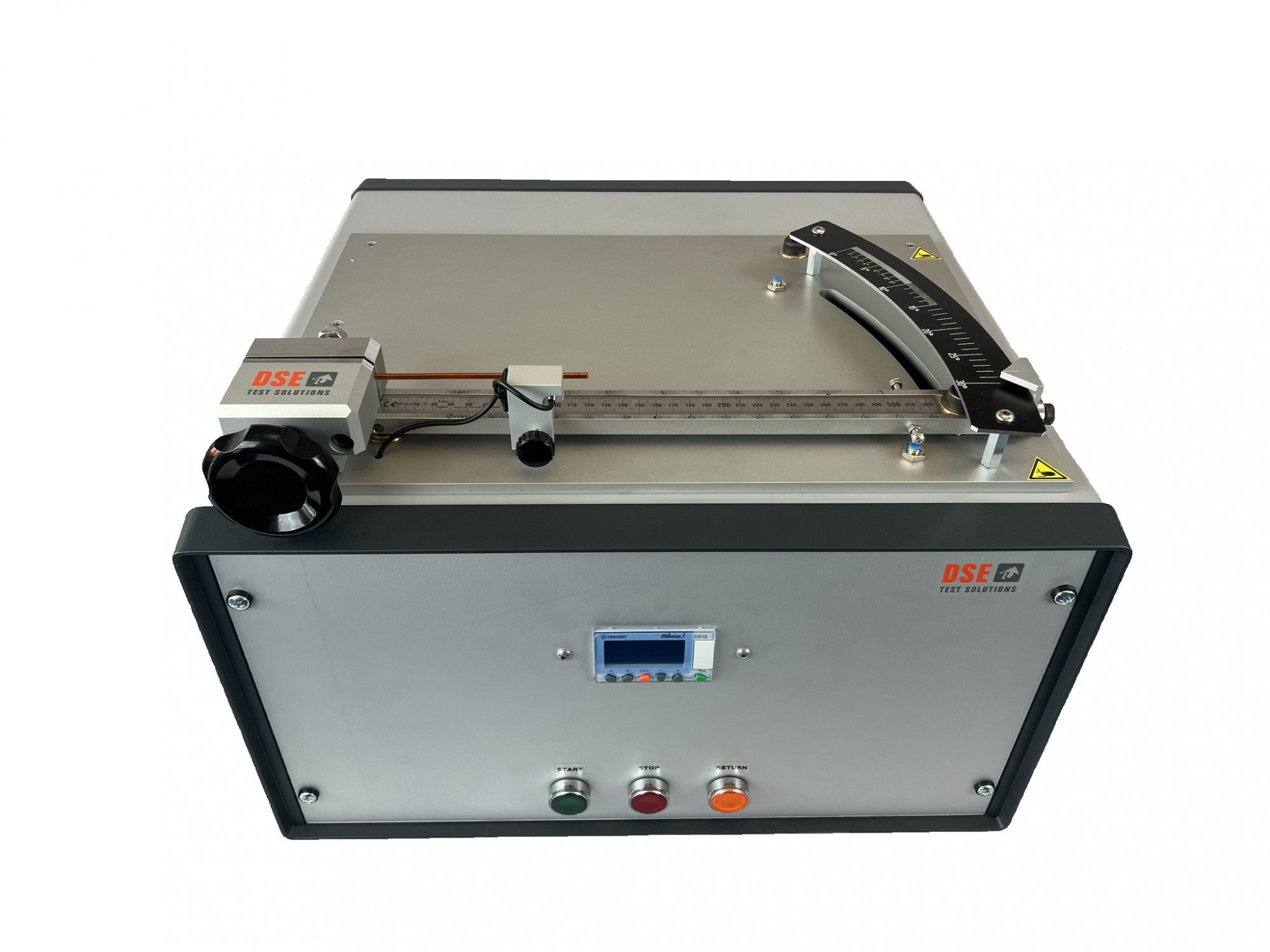
Spring Back Tester
Spring Back Tester
Spring Back Tester

CONTACT US

Henrik Jensen

Need help?

Spring Back Tester

Datasheet - Spring back tester: Model SB0, SB1

sb0_sb1-v020200.pdf

Datasheet - Spring back tester: Model SB3, SB4

sb3_sb4-v020200.pdf

Datasheet - Spring back tester: Model SB5, SB6

sb5_sb6---v020000.pdf

RELATED

DSE Test Solutions
Elongation Testers
Mechanical Tester

Elongation Testers

Read more
Scrape Testers
Mechanical Tester

Scrape Testers

Read more
Jerk Testers
Mechanical Tester

Jerk Testers

Read more
Coefficient of Friction Testers
Mechanical Tester

Coefficient of Friction Testers

Read more
Mandrel Winding Tester
Mechanical Tester

Mandrel Winding Tester

Read more
Peel Testers
Mechanical Tester

Peel Testers

Read more
Flat Wire Torsion Tester
Mechanical Tester

Flat Wire Torsion Tester

Read more
Windability tester
Mechanical Tester

Windability tester

Read more

See all cases

See our test solutions in real environments.

See all documents

Browse complete documentation for all test systems and products here.

DSE Test Solutions

CONTACT

DSE Test Solutions A/S
Sverigesvej 19
DK-8700 Horsens

dse@dse.dk
+45 7561 8811

Our certificates Follow us on LinkedIn

DSE Test Solutions

  • Cases
  • Documents
  • News
  • About
  • Contact

Automated test

  • PCBA Test Systems
  • End-of-line Test systems
  • Test Fixtures
  • LabVIEW and Teststand
  • Test Data Management
  • JTAG/Boundary Scan
  • Our technology partners
  • RF Shielded boxes

Wire Testers

  • Laboratory Tester
  • Inline Tester

Mouisture meters

  • DSE4130 - Cranes
  • DSE4111 - Inline
  • DSE4200 - Balers

AI is used to qualify content on this website.

Cookies & Privacy Policy